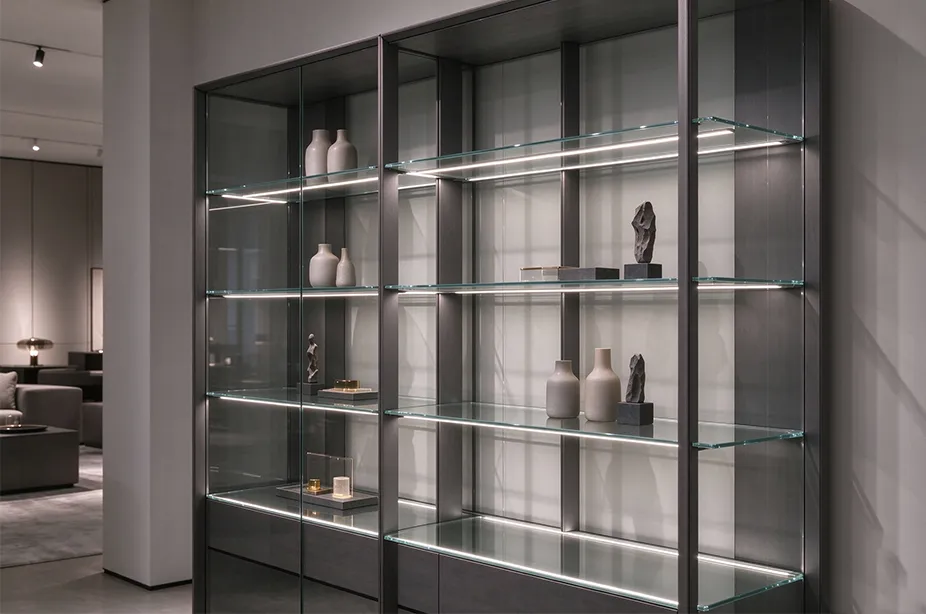
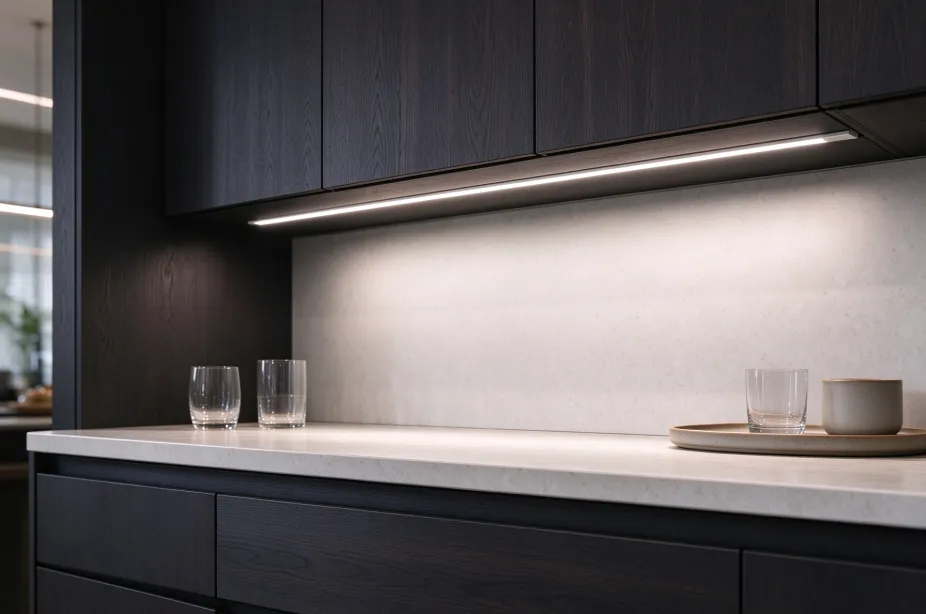
Cabinet lighting controls should match how people interact with their furniture. A hand-wave sensor allows users to switch lighting with a simple hand movement near the sensing area, while a touch sensor responds to direct contact.
For furniture manufacturers, choosing between these two control methods involves more than personal preference. Sensing distance, installation position, cabinet structure, and electrical compatibility all affect the final user experience.
How Hand-Wave and Touch Sensors Work
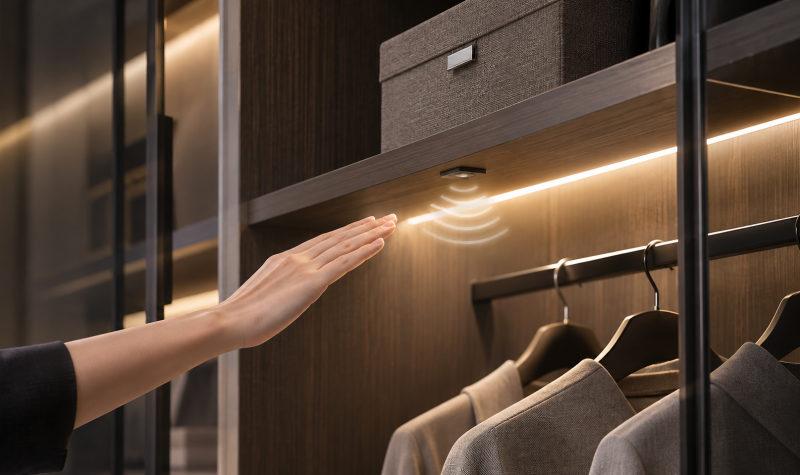
A hand-wave sensor detects hand movement within its specified sensing range. It allows users to switch cabinet lighting without touching the sensor itself. This makes it useful for kitchen worktops, under-cabinet lighting, and other areas where touch-free operation is preferred.
The ARTCILUX S1603 series has a listed sensing distance of 1–3 cm.
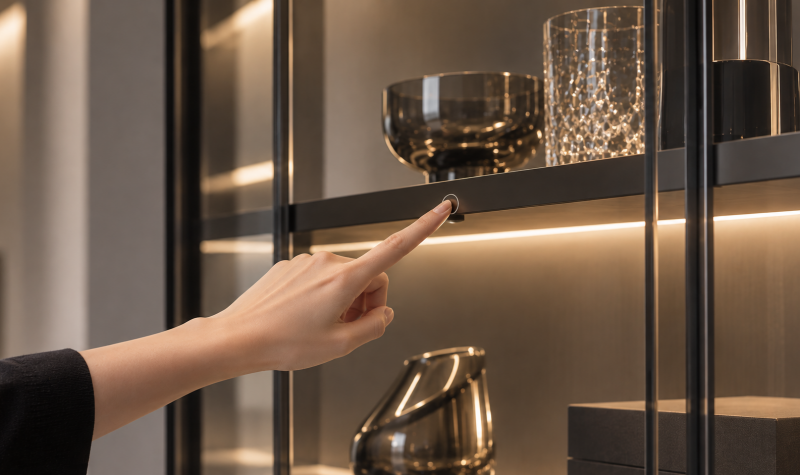
A touch sensor responds to direct contact with its sensing surface. It provides a clearly defined control point for users who prefer deliberate manual operation. Touch sensors are commonly suitable for display shelves, cabinets, and bedside furniture.
The ARTCILUX S1604 series is designed for direct-contact operation, with a listed sensing distance of 0 mm.
Both options can be integrated into furniture lighting systems, but their suitability depends on the intended control method, installation position, and electrical requirements.
Hand-Wave vs. Touch Sensors: Key Differences
The following comparison outlines the main differences for furniture manufacturers and lighting system designers.
| Consideration | Hand-Wave Sensor | Touch Sensor |
|---|
| Operation | Hand movement near the sensor | Direct physical contact |
| Contact required | No | Yes |
| Sensing distance | Model-dependent | Direct contact |
| Typical applications | Kitchen worktops, under-cabinet lighting, open shelving | Display cabinets, shelves, bedside furniture |
| Main advantage | Convenient touch-free switching | Direct and intentional operation |
| Installation planning | Sensor detection area must remain accessible | Touch surface must be easy to reach |
Neither option is universally better. The right choice depends on how users interact with the furniture and where the lighting control needs to be positioned.
Which Sensor Is Right for Different Furniture Applications?
Different furniture applications create different control requirements.
Kitchen Cabinets and Under-Cabinet Lighting
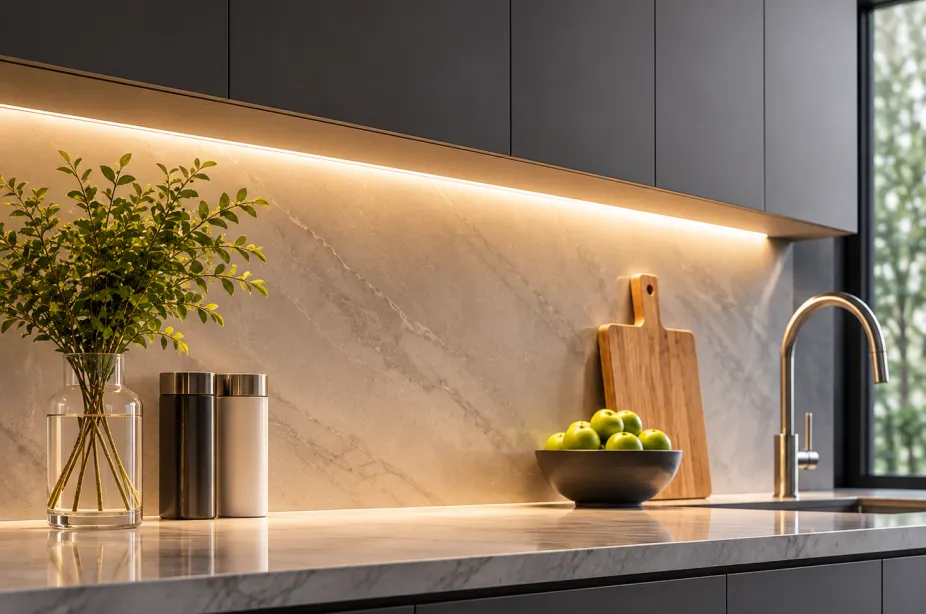
Hand-wave sensors can be practical for kitchen work areas where users may prefer to operate lighting without touching a switch. The sensor should be installed in an accessible position within its specified detection range.
Display Cabinets and Shelving
Touch sensors provide a clearly defined control point for display furniture. They are suitable when users prefer direct manual operation rather than hands-free switching.
Bedside Furniture
A touch sensor can provide convenient lighting control when installed within easy reach of the user. Its position should be considered alongside the furniture layout and other electrical components.
Open Shelving and Custom Furniture
Either option may be suitable. Manufacturers should consider the furniture structure, available mounting space, user preferences, and intended lighting behavior before selecting a control method.
For projects involving door-triggered or motion-based lighting, see our Wardrobe Lighting Sensor Guide for further guidance.
What Should Manufacturers Consider When Installing Cabinet Sensors?
Selecting the right sensor requires more than checking its sensing distance. Several technical and structural details should be evaluated before production.
1. Sensing Distance
Confirm the sensor's specified detection range and ensure that users can operate it comfortably. The S1603 lists a sensing distance of 1–3 cm, while the S1604 responds to direct contact.
2. Installation Position
Position the sensor where users can reach or activate it naturally. Avoid locations where cabinet structures, decorative panels, or other components interfere with normal operation.
3. Electrical Compatibility
Check the sensor's operating voltage and load rating against the connected LED lighting system. The LED driver, sensor, and fixtures must be compatible.
4. Furniture Structure
Consider the available installation space, panel thickness, cable routing, and access to electrical connections. These details should be confirmed during furniture design rather than after production.
5. Sample Testing
Test the complete lighting system inside a representative cabinet assembly. Check sensor response, operating convenience, installation stability, and compatibility with the selected LED fixtures before approving bulk production.
ARTCILUX Hand-Wave and Touch Sensor Solutions
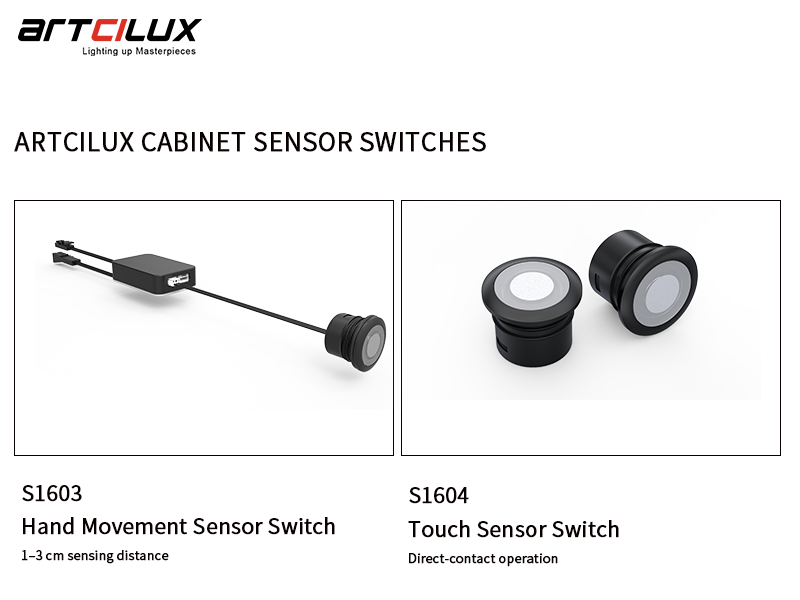
ARTCILUX offers hand-movement and touch sensor switches for integrated cabinet and furniture lighting applications.
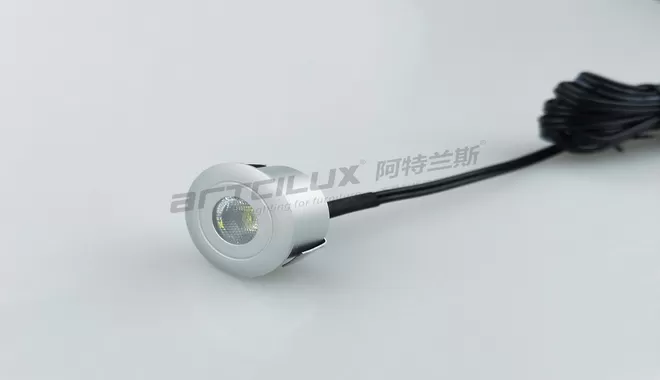
Its wired sensor range includes the S1603.1S/S1603.2S Single/Dual Hand Movement Sensor Switches and S1604.1S/S1604.2S Single/Dual Touch Sensor Switches.
Both product ranges support 12V/24V operation and list a 60W load power rating. Their product specifications also include embedded and surface-mounted installation options.
| Specification | S1603 Hand-Wave Sensor | S1604 Touch Sensor |
|---|
| Model | S1603.1S / S1603.2S | S1604.1S / S1604.2S |
| Operating Voltage | 12V / 24V | 12V / 24V |
| Listed Load Power | 60W | 60W |
| Sensing Distance | 1–3 cm | 0 mm |
| Product Size | φ16 × 10 mm | φ16 × 10 mm |
| Installation | Embedded / Surface-mounted | Embedded / Surface-mounted |
These options allow furniture manufacturers to select suitable control methods according to their furniture structure, user interaction requirements, and lighting system specifications.
Explore the ARTCILUX Cabinet Sensor Switch range, including the S1603 Hand Movement Sensor and S1604 Touch Sensor.
For OEM and ODM projects, manufacturers can provide cabinet drawings, required control functions, mounting dimensions, lighting voltage, and expected order quantities to support product selection and engineering evaluation.
Conclusion
Hand-wave and touch sensors offer different ways to control cabinet lighting. Hand-wave sensors allow touch-free switching, while touch sensors provide direct manual operation. The right choice depends on furniture design, user preferences, sensing distance, and electrical compatibility.
ARTCILUX provides both sensor options for furniture manufacturers seeking integrated lighting control solutions. Testing the selected sensor within a representative furniture assembly helps confirm its operation and installation suitability before production.
Frequently Asked Questions
What is the difference between a hand-wave sensor and a touch sensor?
A hand-wave sensor detects hand movement without direct contact, while a touch sensor requires physical contact.
What is the sensing distance of the ARTCILUX S1603?
The S1603 series lists a sensing distance of 1–3 cm.
Does the ARTCILUX S1604 require direct contact?
Yes. The S1604 is a touch sensor with a listed sensing distance of 0 mm.
Can these sensors work with both 12V and 24V lighting systems?
Both product ranges list 12V/24V operating voltage. Confirm compatibility with the complete lighting system.
Can hand-wave and touch sensors be recessed or surface-mounted?
Yes. Both product ranges list embedded and surface-mounted installation options.
Do the S1603 and S1604 support brightness adjustment?
Their listed product specifications describe sensor switching functions. Confirm dimming requirements and controller compatibility when specifying a lighting system.