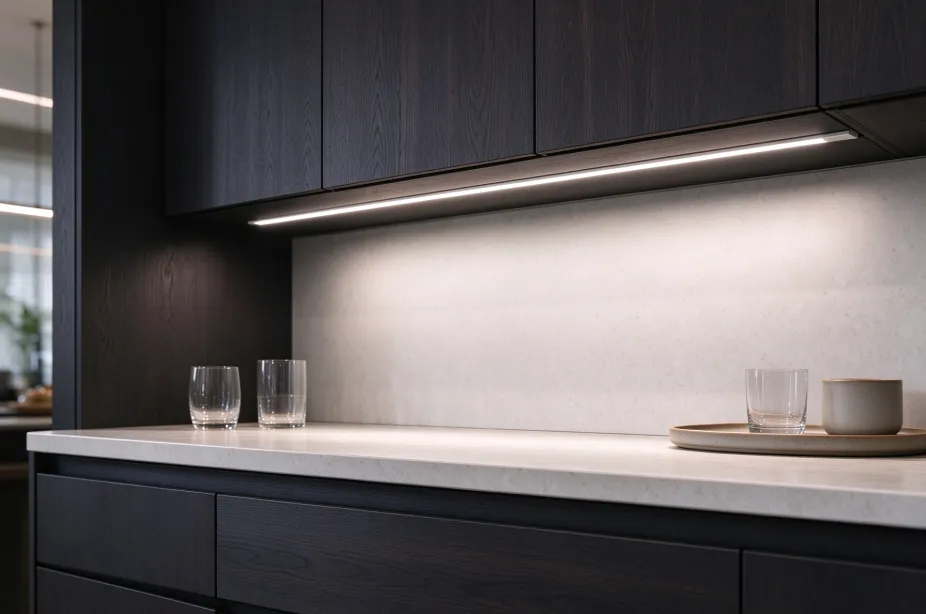
Kitchen under-cabinet LED strip lighting is more than a decorative feature. When properly planned, it provides direct illumination for countertops, food preparation areas, and other frequently used kitchen work surfaces. However, the final result depends on more than choosing an LED strip with sufficient power. Fixture placement, light distribution, cabinet depth, countertop materials, and viewing angles all influence the lighting performance.
For kitchen manufacturers, cabinet makers, and furniture brands, under-cabinet lighting should be considered during the cabinet design process. A poorly positioned light may leave parts of the countertop in shadow, create unwanted reflections, or produce uneven illumination across different cabinet sections.
This guide explains how to plan kitchen under-cabinet LED lighting, choose suitable installation positions, evaluate brightness, and select the right lighting format for different kitchen structures. ARTCILUX provides a range of kitchen cabinet lighting products designed for integrated furniture applications.

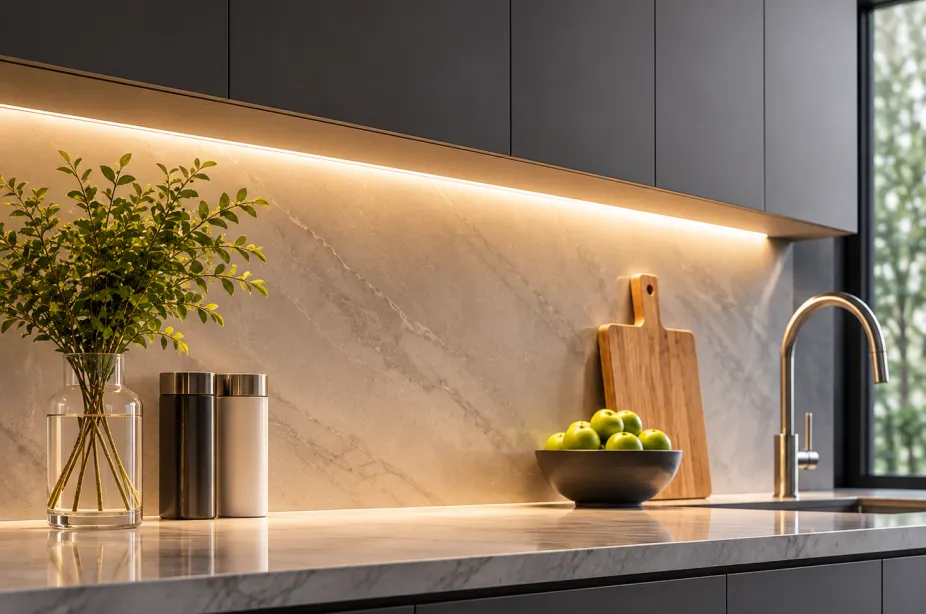
Kitchen under-cabinet lighting provides practical illumination while complementing the overall furniture design.
Why Is Under-Cabinet Lighting Important for Kitchen Work Surfaces?
Kitchen lighting typically combines several layers, including general illumination, task lighting, and decorative lighting. Ceiling fixtures provide overall room illumination, while under-cabinet lights bring additional light closer to the countertop where detailed activities take place.
Without dedicated task lighting, people working at a countertop may create shadows with their own bodies when standing between an overhead light and the work surface. This can make food preparation, reading appliance controls, and handling small kitchen items less convenient.
Under-cabinet LED lighting helps address this problem by directing light onto the countertop rather than relying entirely on ceiling-mounted fixtures.
According to ENERGY STAR's kitchen lighting guide, under-cabinet lighting provides direct illumination of kitchen work surfaces, with fixtures positioned to minimize shadowing.
For kitchen manufacturers, this means that lighting design should consider the actual activities performed at each countertop section.
Food preparation areas: Provide continuous illumination for cutting, mixing, and handling ingredients.
Sink areas: Improve visibility when washing food, cleaning utensils, and handling kitchen equipment.
Cooking areas: Supplement other kitchen lighting so that frequently used work surfaces are easier to see.
Storage and serving areas: Improve visibility along countertops used for placing appliances, dishes, and kitchen accessories.
Under-cabinet lighting should complement the main kitchen lighting system rather than replace it. A well-planned combination of general and task lighting creates a more functional environment.
Where Should LED Strip Lights Be Positioned Under Kitchen Cabinets?
Fixture placement is one of the most important factors in under-cabinet lighting design. Even a high-quality LED strip may produce poor results if it is installed too far from the intended work area or positioned where the light source creates uncomfortable glare.
For most kitchen countertop applications, the front portion of the cabinet underside is a useful starting point. This position helps direct light toward the working surface instead of concentrating too much illumination near the backsplash.
The National Kitchen & Bath Association (NKBA) addresses this in its Kitchen & Bath Planning Guidelines, recommending that under-cabinet lighting be planned near the front edge of the cabinet or shelf for effective illumination.
Front-Positioned Lighting
Installing the fixture toward the front portion of the cabinet underside can improve light coverage across the countertop. It is particularly useful when the primary purpose is task illumination rather than decorative backsplash lighting.
However, the light source should not automatically be placed at the very front edge. The cabinet fascia, diffuser, and fixture angle should be considered so that the LEDs are not directly visible from normal standing or seated positions.
Center-Positioned Lighting
A centrally positioned fixture can provide a balanced lighting distribution in some cabinet configurations. It may be suitable when the cabinet depth, countertop depth, and light distribution characteristics are properly matched.
Manufacturers should test this arrangement using the actual cabinet structure because the same mounting position can produce different results with different fixture optics.
Rear-Positioned Lighting
Installing lighting closer to the backsplash can create a stronger wall-washing effect and highlight the texture of the backsplash material. However, it may provide less direct illumination toward the front portion of a deep countertop.
| Installation Position | Typical Lighting Effect | Main Consideration |
|---|
| Front Portion | More direct countertop illumination. | Control direct glare and conceal the fixture where possible. |
| Center | Balanced light distribution in suitable configurations. | Evaluate countertop coverage and cabinet depth. |
| Rear Portion | Stronger backsplash and wall illumination. | Check whether the front work area receives enough light. |
For L-shaped kitchens and long countertop runs, lighting positions should also be coordinated around cabinet joints, corner sections, range hoods, and changes in cabinet depth. The goal is to maintain useful illumination across the actual working area rather than simply installing a fixture beneath every cabinet panel.
Before mass production, furniture manufacturers should test a representative cabinet section with the intended countertop material and fixture position.

Integrated linear lighting demonstrates how fixture placement can improve the illumination of kitchen work surfaces.
How Bright Should Under-Cabinet LED Lighting Be?
Brightness is another important consideration when specifying kitchen under-cabinet lighting. However, selecting a product based only on its wattage can lead to inaccurate comparisons.
Three technical measurements should be understood:
Watts (W): Measures electrical power consumption.
Lumens (lm): Measures the total amount of visible light emitted by a source.
Lux (lx): Measures the illuminance received by a surface, such as a kitchen countertop.
For kitchen task lighting, the actual illuminance on the countertop is more useful than wattage alone. Two LED strips with similar electrical power may produce different lighting results because of differences in LED efficiency, optical design, diffuser materials, and installation geometry.
Use Work-Surface Illuminance as a Design Reference
The NKBA Kitchen & Bath Planning Guidelines recommend a minimum of 50 foot-candles (approximately 538 lux) for task illumination at activity centers, depending on the user's visual needs and the activity being performed.
This is a general task-lighting reference for the activity area, not a requirement that every under-cabinet LED strip must independently produce 538 lux. The final countertop illuminance depends on the combined contribution of ceiling fixtures, under-cabinet lighting, and other light sources.
For a professional furniture lighting project, manufacturers should request the following information from the lighting supplier:
Rated luminous output, preferably expressed in lumens per meter for linear lighting.
Power consumption and operating voltage.
Light distribution and optical characteristics.
Color rendering performance.
Dimming compatibility, where adjustable brightness is required.
Where possible, use a lux meter to measure the actual countertop illumination at several positions along the cabinet run. Testing should be performed with the intended fixture, mounting height, countertop material, and normal room lighting conditions.
Consider Color Rendering and Visual Comfort
Kitchen lighting should also make food, ingredients, and countertop materials appear natural. A high Color Rendering Index (CRI) is therefore an important consideration when selecting under-cabinet LED fixtures.
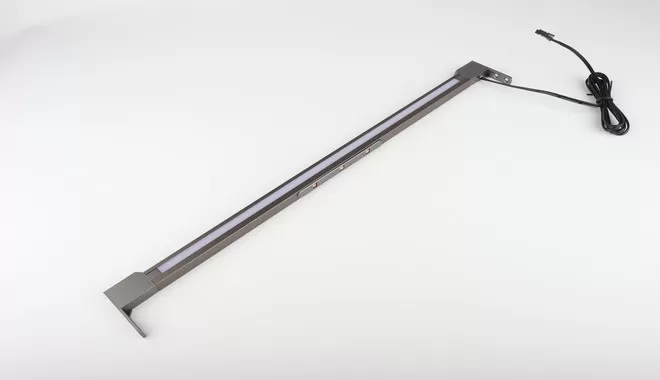
ARTCILUX's A4A06/16 Under Cabinet Light is one example of a kitchen-compatible lighting product. Its published specifications include 12V operation, CRI above 90, and a milky-white PC cover designed to guide light and provide soft illumination with reduced glare. The model also incorporates a hand-sweep sensing switch.
These characteristics can be useful when developing integrated kitchen lighting solutions where visual comfort, color rendering, and convenient operation are important.

Slim linear LED fixtures can be integrated into furniture structures to provide functional illumination with a compact profile.
LED Strip, Linear Light or Panel: Which Format Fits the Kitchen?
Not every kitchen cabinet requires the same type of lighting fixture. The choice between flexible LED strips, integrated linear lights, and light panels depends on the available space, required illumination, furniture construction, and desired appearance.
Flexible LED Strip Lighting
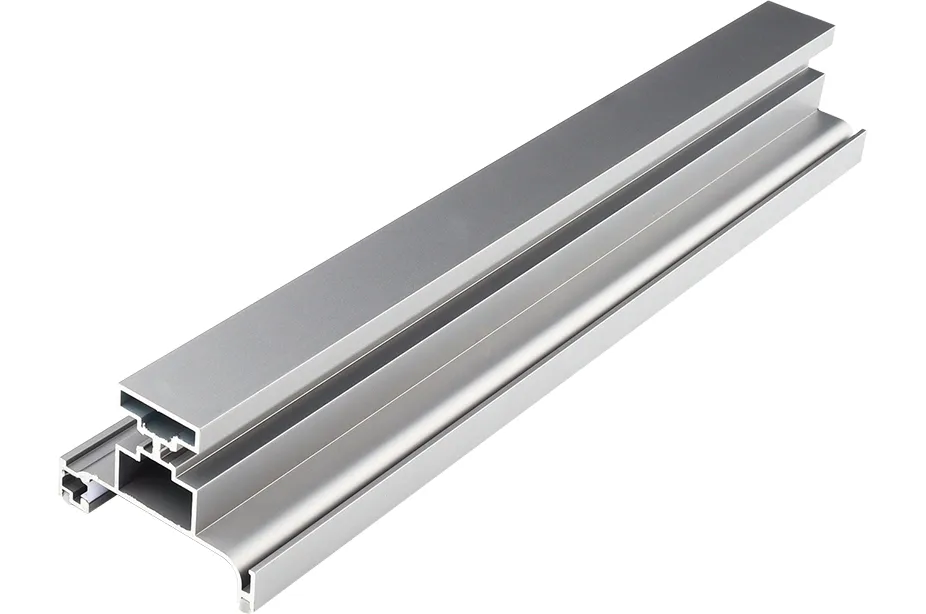
Flexible LED strips are suitable for narrow installation spaces, customized lengths, and cabinet structures with different shapes. They can be integrated into compatible profiles or prepared channels to create continuous lighting along a cabinet run.
For kitchen manufacturers working with different cabinet dimensions, flexible cabinet LED strip lights can offer useful flexibility in product configuration and installation planning.
Integrated Linear Lighting
Linear fixtures provide a continuous lighting arrangement and can simplify the integration of lighting into the cabinet structure. Their housing, diffuser, and mounting method should be selected according to the cabinet design and intended light distribution.
They are particularly suitable for long countertop sections where manufacturers want to maintain a consistent lighting line.
Under-Cabinet Light Panels
LED light panels provide a broader illuminated surface and can be suitable for applications requiring relatively even light distribution. Their shape and mounting dimensions should be checked against the available underside area of the cabinet.
Compared with a narrow linear fixture, a panel may provide a different distribution pattern, so the selected format should be evaluated according to the actual countertop coverage required.
Cabinet Spotlights
Compact spotlights are useful for highlighting specific objects, decorative details, or selected sections of a kitchen. However, they generally create more localized illumination than continuous linear fixtures. They should not automatically be treated as a replacement for continuous countertop task lighting.
For most kitchen work surfaces, linear or strip lighting is a practical starting point, while panels and spotlights can supplement the overall design according to the project requirements.

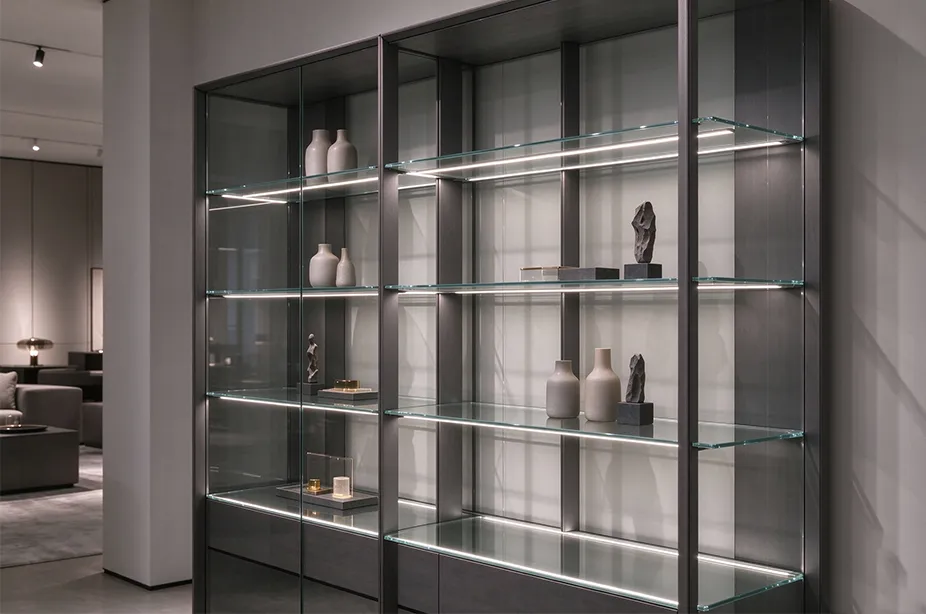
LED panel lighting offers another format for applications requiring broader illumination across furniture surfaces.
How to Reduce Shadows, Glare and Reflections on the Countertop
A kitchen lighting system should provide useful illumination without creating uncomfortable brightness or distracting reflections. This is particularly important when countertops are made from polished stone, glossy artificial surfaces, glass, or other reflective materials.
Conceal the Direct Light Source
Where the cabinet design allows, the fixture should be positioned so that the LED source is not directly visible from normal standing or seated positions. A suitable housing or diffuser can help create a more comfortable lighting appearance.
Test Reflections on the Actual Countertop
A lighting position that looks appropriate on a sample cabinet may produce unwanted reflections when installed above a polished countertop. Furniture manufacturers should test the complete arrangement using the actual surface material and the intended viewing angles.
Balance Task Lighting and Ambient Lighting
Under-cabinet lights should complement the room's general illumination. Excessively bright task lighting combined with a much darker surrounding environment may create an uncomfortable visual contrast.
For kitchens with different activities, dimming or separate lighting zones can provide greater flexibility. A brighter setting can be used during food preparation, while a lower setting may be more appropriate for evening ambient lighting.
Before approving a final configuration, evaluate the lighting from the user's normal working position rather than judging it only from directly beneath the cabinet.
What Should Furniture Manufacturers Confirm Before Production?
For cabinet manufacturers and OEM suppliers, under-cabinet lighting should be included in the furniture specification before mass production begins. This reduces the need for later modifications and helps ensure that the lighting system fits the finished cabinet structure.
The following points should be confirmed during project planning:
| Design Factor | What Manufacturers Should Confirm |
|---|
| Cabinet Dimensions | Cabinet length, underside depth, front-edge structure, and available mounting space. |
| Countertop Coverage | Required work areas, countertop depth, and lighting distribution. |
| Fixture Selection | LED strip, linear fixture, or panel according to the cabinet structure. |
| Electrical Compatibility | Operating voltage, total connected load, connector type, and compatible driver. |
| Control Method | Manual switching, hand-wave sensing, dimming, or other compatible control functions. |
| Environment | Suitability for the installation area, including relevant moisture, heat, and protection requirements. |
| Maintenance | Access to the driver, connectors, and replaceable lighting components. |
Power supply selection should be coordinated with the total lighting load and the required operating voltage. Manufacturers can review the ARTCILUX cabinet LED power supply range when planning a complete kitchen lighting system.
For areas close to sinks or cooking equipment, do not assume that every cabinet light is suitable for the surrounding environment. Confirm the actual product protection rating, installation instructions, and applicable electrical requirements before specifying a model.
It is also important to maintain access to drivers and electrical connections. These components should not be permanently enclosed in locations where inspection or replacement becomes difficult.
Before approving mass production, request a physical sample and evaluate the complete lighting arrangement. The sample should include the selected fixture, mounting accessories, countertop material, and intended control method.
FAQs About Kitchen Under-Cabinet LED Strip Lighting
Where Is the Best Place to Install LED Strip Lights Under Kitchen Cabinets?
For countertop task lighting, the front portion of the cabinet underside is generally a useful starting point because it directs light toward the working surface. The final position should account for cabinet dimensions, fixture optics, direct glare, and countertop reflections.
How Many Lumens Do I Need for Under-Cabinet Lighting?
There is no single lumen value that suits every kitchen. The required output depends on countertop depth, mounting height, fixture efficiency, light distribution, surface reflectance, and existing ambient lighting. Evaluate the actual illuminance on the countertop rather than selecting a product based only on wattage.
Are LED Strips or Light Panels Better for Kitchen Cabinets?
Flexible LED strips are suitable for narrow spaces and customized cabinet structures. Linear fixtures provide continuous illumination, while panels can provide broader light distribution. The best choice depends on the cabinet dimensions, required coverage, and installation conditions.
Should Under-Cabinet LED Lighting Have a High CRI?
A high CRI is useful in kitchens because it helps food, ingredients, and surrounding materials appear more natural. CRI 90 or above is a commonly specified target for projects where accurate color rendering is important.
Can Under-Cabinet LED Lighting Be Dimmed?
Yes, provided that the LED fixture, driver, and controller support the same dimming method. Dimming allows users to adjust brightness according to different kitchen activities and lighting preferences. Compatibility should be confirmed before selecting the complete system.
Well-designed kitchen under-cabinet LED lighting combines suitable fixture placement, appropriate brightness, comfortable light distribution, and reliable electrical components. For furniture manufacturers, these decisions should be made during product development rather than treated as final installation details.
By evaluating actual countertop illumination, testing the lighting with representative cabinet materials, and selecting compatible fixtures and power supplies, manufacturers can develop kitchen lighting systems that improve both functionality and furniture appearance.
ARTCILUX provides integrated cabinet lighting products, LED strips, linear fixtures, light panels, sensors, and power supplies for kitchen and furniture manufacturers. A coordinated lighting solution can help brands deliver more practical and visually consistent kitchen products.
ARTCILUX – Lighting up Masterpieces.