I First Saw the Opportunity in Milan
I founded the company in 2004.
The real change in direction came at the Milan Furniture Fair in 2008.
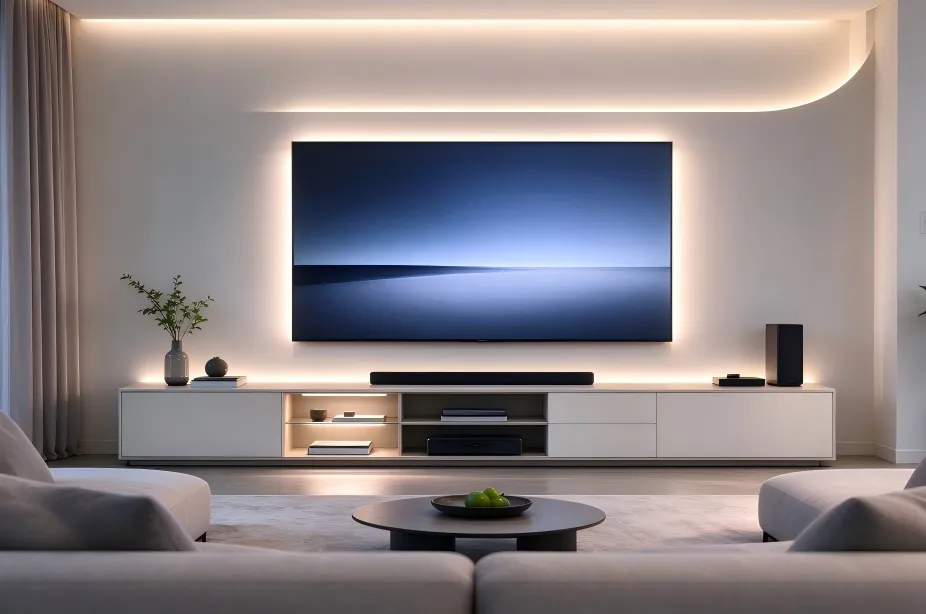
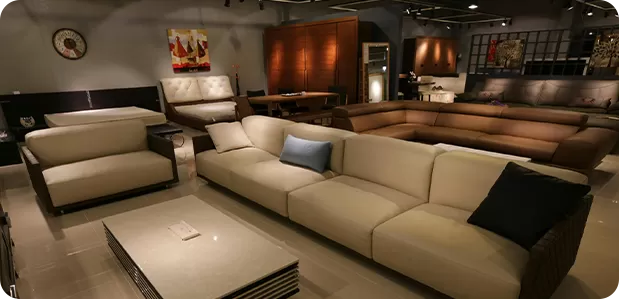
I remember seeing the system furniture shown by the German brand Hülsta. Lighting was already moving into cabinets and storage systems, but it was not trying to attract attention. The furniture stayed at the center; the light simply made it feel more complete.
That was the first time I clearly realized that lighting would become more deeply integrated into furniture.
I did not know how large the market would become, but I believed the direction was right.
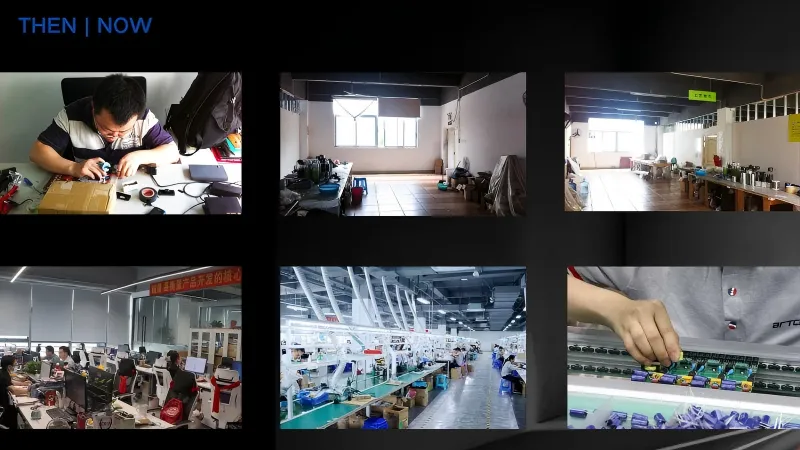
We entered furniture lighting in 2010. In 2011, we established a dedicated furniture lighting factory. The first facility was a very basic 250-square-meter workshop next to a waste collection site.
2012: Almost Out of Cash, Then TOTO Arrived
By 2012, the company was under severe financial pressure. At the worst point, we were close to shutting down. I borrowed money at extremely high interest rates just to keep the factory running.
Furniture lighting was still a young market. Orders were small, while development demanded time and money. From a purely financial point of view, many of our choices did not look particularly sensible.
But I kept going because I still believed the market would come.
That was also the year TOTO found us.
At their first factory audit, they brought a thick stack of requirements. To be candid, there were many things we could not fully meet at the time. In terms of scale and management systems, we were not the typical supplier for a company like TOTO.
During a product discussion, I noticed that the lighting in their bathroom cabinet and the 220V heating film were controlled separately. I asked: if the heating film also comes in 12V, why not bring both functions into one low-voltage control system?
They immediately called the supplier. The answer was yes.
That simple exchange became the start of the partnership.
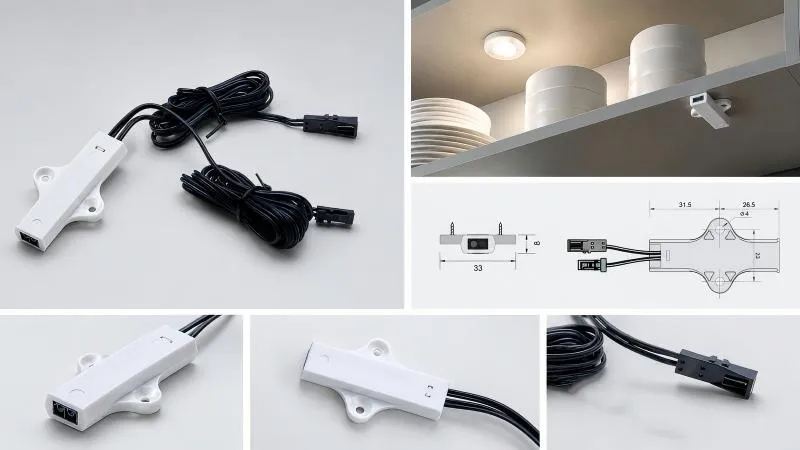
We began developing the S1003 gesture sensor switch and recessed linear lighting. Prototyping took more than a year. Tolerances were down to the millimeter, and the delivery process was difficult. People inside the company told me to stop because there was hardly any money in the project.
We kept going and finished it.
That experience taught me something very concrete: when a small company cannot win on scale, it can still earn an opportunity by understanding the customer’s problem more deeply than the customer expects.
Later, I Realized the Problem Was Never Just the Light
In the early years, I also thought mostly in terms of individual products: could the switch be easier to use, the light thinner, the structure smarter?
The longer we worked in furniture lighting, the more I felt that this was too narrow a way to look at the problem.
Even after receiving a good luminaire, the customer still had to solve power, wiring, controls, connections, installation and after-sales issues. If those elements remained separate, the customer was left to deal with the gaps.
By 2015, I was pushing the company clearly toward a systems approach. We first completed the power-supply platform, then extended into software and intelligent control.
From that point on, the question gradually changed from “How do we make a better light?” to “How do we make it easier for furniture companies to get the entire lighting system right?”
What Artcilux should build is not just a light, but a system that makes lighting easier for furniture companies to use.
I’m Skeptical of Big Claims About Technology Moats
People often ask what technology we have that competitors simply cannot copy.
My answer is probably less exciting than they expect. I have never liked turning every product improvement into a claim of “revolutionary technology.”
Lighting and furniture are both mature industries. For a company like ours, the advantages that can truly compound over time are usually not mysterious underlying technologies. They come from understanding customers, combining products intelligently, improving reliability, making installation easier, and solving one practical problem after another.
I care less and less about how advanced a technology sounds. I care more about what happens after it is installed in furniture: does it work reliably, can the factory install it easily, and can a problem be diagnosed quickly when something goes wrong?
The customer does not need to know how complicated the cabinet is inside. It simply needs to work.
Keep the complexity on our side. Make it simple for the user.
I Once Wanted the Company to Become Much Bigger
After running a company for long enough, it is easy to assume that the next goal must always be “bigger.”
I seriously considered taking the company public, and for a time I believed revenue, scale and speed should keep moving upward.
Over time, I became less convinced by that single measure of success.
If the company gets bigger while the organization becomes exhausted, financial risk rises and the products receive less care, then size by itself does not mean much.
By our twentieth anniversary, I had come back to a much simpler goal from the early days: build a real industrial business that can develop in a healthy and sustainable way.
I would rather make the company more focused, more disciplined, financially healthier and better at its products. Surviving several business cycles matters more than looking large for a few years.
Not growth for its own sake, but focus, discipline and steady progress for the long term.
The First 20 Years to Build Roots, the Next 20 to Grow Globally
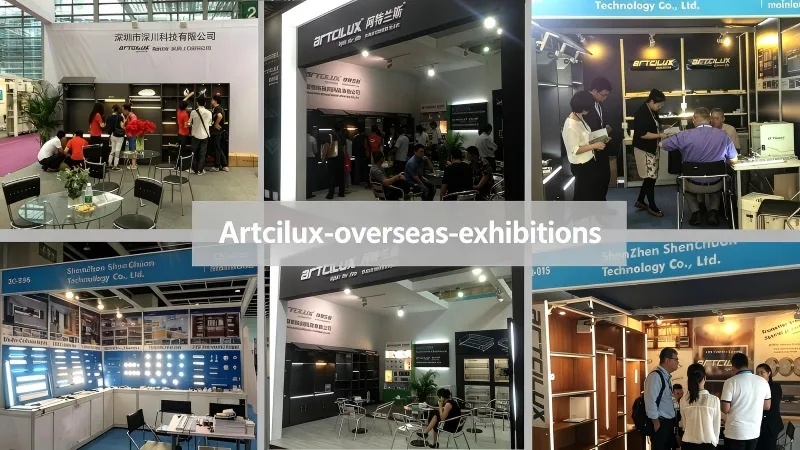
We entered Europe in 2014. Today, Artcilux products reach more than 60 countries and regions.
In 2025, we established Artcilux Lighting Inc. in the United States.
I do not see that as proof that globalization is complete. If anything, our serious international work is only beginning.
Over the past two decades, we built manufacturing, supply-chain, R&D and customer capabilities in China. The next stage is to learn how to become part of each market, not simply how to sell products into it.
When a customer in the United States, Germany or the Middle East no longer sees Artcilux as a distant Chinese supplier, but as a brand they can reach when something goes wrong and rely on when support is needed, then we will have truly gone global.
First 20 years: build roots in China. Next 20 years: grow globally.
Why “Lighting up Masterpieces”
The longer I work in furniture lighting, the less I want the light itself to demand attention.
Good furniture is already the work of designers, engineers, craftspeople and manufacturers. Lighting should step back and let the material, proportion, craftsmanship and space speak for themselves.
That is why “Lighting up Masterpieces” has always felt right to me.
We are not the masterpiece. What our customers create is.
We simply turn on the light.