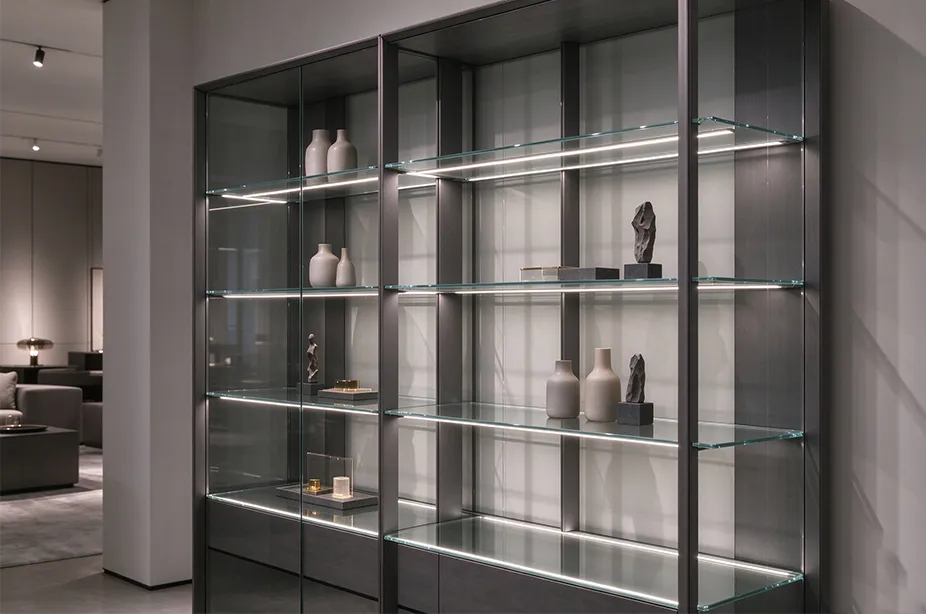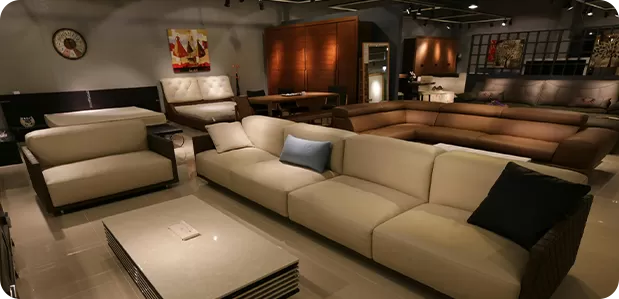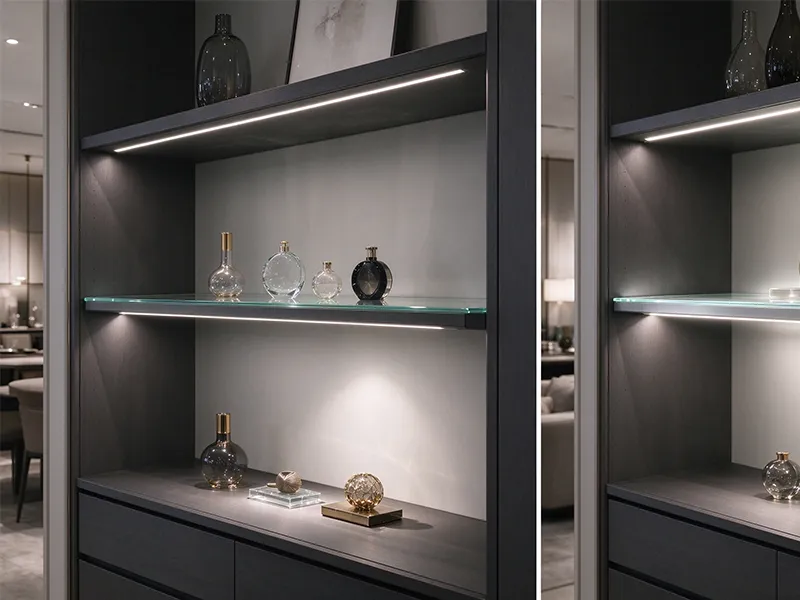
Glass shelf lighting can highlight displayed objects, emphasize glass edges, and enhance the appearance of display cabinets and modern furniture. But choosing the right fixture requires more than comparing product dimensions or brightness.
The direction of light emission, glass thickness, fixture profile, and installation method all affect the final result.
For cabinet makers and furniture manufacturers, the key is to choose a lighting configuration that achieves the intended visual effect while fitting the shelf structure correctly.
What Is the Difference Between Single-Sided and Three-Sided Lighting?
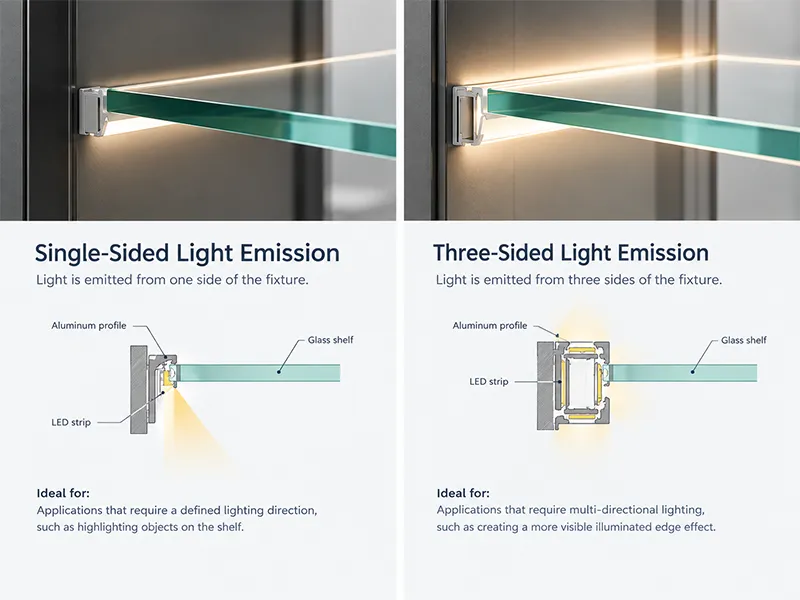
Single-Sided Glass Shelf Lighting
A single-sided fixture emits light primarily through one side of its profile. It is a practical choice when the design calls for a defined lighting direction.
Consider this configuration when you want to direct light toward a particular area of the display and the selected fixture can achieve that effect in the intended installation position.
Single-sided lighting is not necessarily less bright or less effective. Its suitability depends on the fixture's optical design, orientation, and application.
Three-Sided Glass Shelf Lighting
A three-sided fixture emits light through three sides of its profile, offering multiple light-emitting directions.
Consider this configuration when the lighting design calls for light emission from several sides of the fixture, such as when the illuminated profile itself forms part of the visual effect.
However, three-sided emission does not automatically mean greater brightness or more uniform illumination. The final result depends on the specific fixture, its position, and the surrounding glass and furniture structure.
The main distinction is light-emitting direction, not which design is universally better.
Four Factors to Consider When Choosing a Glass Shelf Light
1. Define the Intended Lighting Effect
Start with the display rather than the product catalogue.
Ask yourself:
Should the light be directed primarily toward one area?
Should light emission from multiple sides contribute to the visual effect?
From which angles will people view the shelf?
Should the lighting emphasize the displayed objects, the glass shelf, or both?
If one primary lighting direction meets the requirement, start by evaluating single-sided options. If multiple emitting directions are important to the design, compare suitable three-sided fixtures.
The objective is to select the configuration that best matches the intended effect.
2. Match the Fixture to the Glass and Profile Dimensions
Glass thickness and fixture dimensions must be checked before the shelf is manufactured.
Artcilux's product manual includes examples of both configurations:
A260A: Single-sided glass shelf light, with a listed profile size of 11 × 8.5 mm.
A2103 (GT6): Three-sided glass shelf light, measuring 25 × 14 mm.
A2105 (GT8E): Three-sided glass shelf light, measuring 28 × 14 mm.
A2107 (GS8): Three-sided glass shelf light, measuring 15 × 9.7 mm.
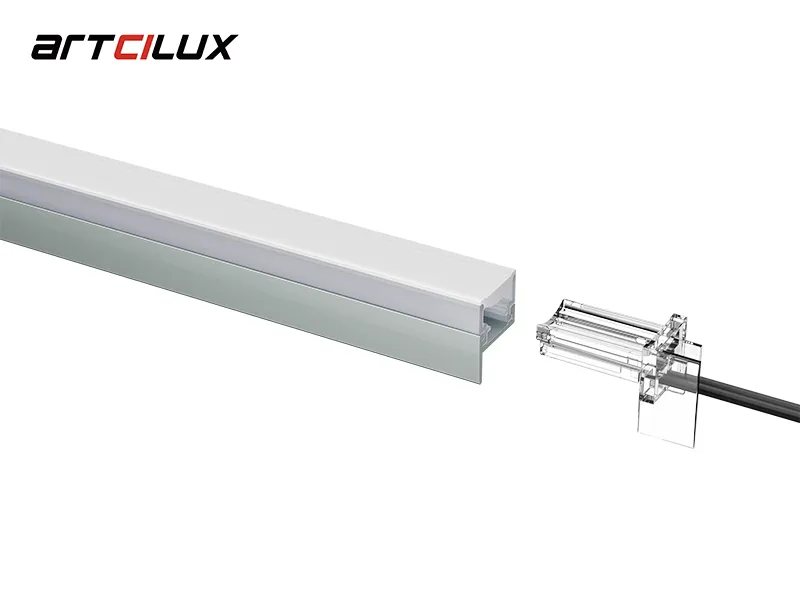
These are model-specific dimensions, not universal sizes for each lighting type.
Before making a final selection, confirm the exact model's technical drawing, glass thickness requirements, machining dimensions, and installation method. Do not assume that fixtures with similar light-emitting directions share the same fitting requirements.3. Check Installation Space and Furniture Structure
The selected fixture must fit the shelf and its supporting structure.
Check the available mounting space, the position of the glass, and any clearance needed for wiring and connections. The installation should also maintain the intended appearance of the finished furniture.
For customized projects, coordinate the lighting specification with the furniture drawings before processing the glass.
This simple step helps avoid choosing a fixture that produces the right visual effect but cannot be installed as planned.
4. Evaluate the Complete Lighting Effect
A fixture should be assessed in the actual furniture application, not only through its specifications or product images.
Test a sample with the intended glass and mounting arrangement. Check whether the light reaches the target area, whether the fixture is visually distracting from important viewing angles, and whether reflections or glare affect the display.
Color temperature and color rendering should also suit the displayed objects and surrounding materials. These are separate considerations from whether the fixture emits light from one side or three.
If both configurations appear suitable, compare samples under realistic viewing conditions before committing to mass production.
A Simple Selection Rule
Use this rule to narrow your options:
Choose single-sided lighting when one defined light-emitting direction meets the design requirement. Choose three-sided lighting when light emission from multiple sides is an important part of the intended effect.
Then verify the exact fixture dimensions and glass compatibility. If either configuration fails the installation requirements, it is not the right choice for that project.
Glass Shelf Lighting Solutions from Artcilux
Artcilux offers glass shelf and other furniture lighting products for cabinet makers and furniture manufacturers. The product range includes different fixture designs for varied shelf structures and applications.
Explore Artcilux's shelf lighting range to review available options and product specifications.
For a broader look at lighting across furniture applications, read LED Lighting Systems for Wardrobes and Display Cabinets.
Choosing between single-sided and three-sided glass shelf lighting starts with the intended lighting effect, followed by the physical requirements of the shelf.
Start with single-sided lighting when one primary direction is sufficient. Consider three-sided lighting when the design calls for light emission from multiple sides. In both cases, confirm the exact product specifications and installation dimensions before glass processing begins.
The right fixture is the one that delivers the intended visual effect and fits the furniture structure correctly.
Artcilux, Lighting up Masterpieces.
#GlassShelfLighting #FurnitureLighting #CabinetLighting #LEDLighting #DisplayCabinetLighting